

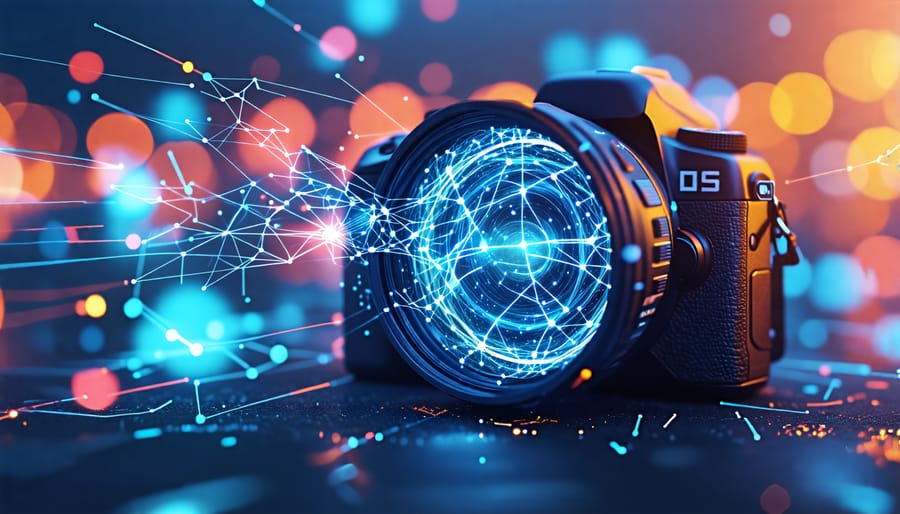
Photography Revolution: AI Takes the Lens
Introduction
Remember the days when photography was all about mastering aperture, shutter speed, and ISO? When hours were spent meticulously composing shots, and editing involved painstakingly adjusting curves and color balances? While those skills remain valuable, the photographic landscape is undergoing a seismic shift, and the epicenter? Artificial intelligence.
Forget clunky Photoshop actions or basic filters. We’re talking about AI that can intelligently analyze scenes, predict optimal settings, and even generate entire images from scratch. This isn’t some distant future fantasy; it’s happening right now, reshaping how we create, consume, and even perceive photographs.
But is this a thrilling evolution or a terrifying prospect? Will AI empower photographers or render them obsolete? Let’s dive into the heart of this photography revolution, exploring the short-term and long-term impacts, and charting a course for photographers to not just survive, but thrive in this brave new world.
The Short-Term Impact: AI as Your Super-Powered Assistant
In the immediate future, AI is poised to become the ultimate photography assistant, streamlining workflows and unlocking creative possibilities we never thought possible. Imagine this:
- Smarter Image Editing: Forget tedious manual adjustments. AI-powered editing tools can now automatically enhance photos, remove blemishes, and even change the lighting based on scene analysis. Apps like Luminar AI and Skylum’s Aurora HDR are already showcasing this power, allowing photographers to achieve professional-looking results with minimal effort.
- Intelligent Scene Recognition: Your camera can now “see” like you do (maybe even better!). AI algorithms can identify objects, faces, and scenes, automatically adjusting settings for optimal results. Say goodbye to blurry action shots or poorly exposed landscapes. Your camera is now a smart sidekick, ensuring you capture the perfect moment.
- Enhanced Image Upscaling and Noise Reduction: Old photos looking grainy? Need to enlarge an image for a print? AI to the rescue! Cutting-edge algorithms can intelligently upscale low-resolution images without sacrificing detail and eliminate noise without blurring the image, breathing new life into your archives.
- Content-Aware Fill Evolved: Remember painstakingly cloning out unwanted objects in Photoshop? AI has turned that process into a one-click wonder. Content-aware fill now works seamlessly, intelligently reconstructing missing areas with incredible accuracy.
This means more time spent on the creative aspects of photography, and less time wrestling with technical challenges. It also democratizes photography, making professional-quality results accessible to everyone, regardless of their technical skills.
The Long-Term Impact: A Brave New World of Image Creation
Looking further down the road, the impact of AI becomes even more profound. Prepare for a paradigm shift in how images are created and consumed:
- Generative AI: The Rise of the Virtual Photographer: Imagine being able to create stunning visuals simply by describing them in words. Generative AI models like DALL-E 2 and Midjourney are already capable of producing incredibly realistic and artistic images from text prompts. This opens up a world of possibilities for creating custom visuals for marketing, design, and even personal projects.
- AI-Powered Stock Photography: Say goodbye to generic stock photos. AI can now generate unique, high-quality images tailored to specific needs. This could disrupt the traditional stock photography market, providing businesses with more affordable and customizable visual content.
- The Blurring Lines of Reality: As AI-generated images become increasingly realistic, the line between what’s real and what’s fabricated will become increasingly blurred. This raises important ethical considerations about authenticity, manipulation, and the potential for misuse of AI-generated imagery.
- Hyper-Personalized Photography Experiences: Imagine cameras that learn your individual shooting style and preferences, tailoring their settings and suggestions to your unique needs. AI could also personalize photo editing workflows, providing custom recommendations based on your aesthetic tastes.
The rise of generative AI raises important questions about the future role of photographers. Will they become curators of AI-generated content, or will they find new ways to express their creativity in collaboration with AI tools?
Navigating the AI Landscape: Practical Solutions for Photographers
So, how can photographers adapt and thrive in this AI-driven world? Here are some practical solutions and approaches:
- Embrace AI as a Tool, Not a Threat: Instead of fearing AI, view it as a powerful tool that can enhance your skills and streamline your workflow. Experiment with AI-powered editing software, explore generative AI tools, and integrate them into your creative process.
- Example: A wedding photographer could use AI-powered noise reduction to clean up images shot in low-light conditions, saving hours of manual editing time.
- Focus on Uniquely Human Skills: While AI can automate many tasks, it can’t replicate the human elements of photography, such as creativity, storytelling, and emotional connection. Focus on developing these skills to differentiate yourself.
- Example: A portrait photographer can focus on building rapport with their subjects and capturing authentic emotions, something AI cannot replicate.
- Develop a Niche and Specialize: As AI democratizes photography, it’s more important than ever to carve out a niche and specialize in a specific area. This will allow you to stand out from the crowd and offer unique value to your clients.
- Example: A photographer could specialize in architectural photography, developing a deep understanding of composition, lighting, and architectural design.
- Become an AI Expert: Understand the capabilities and limitations of AI tools. Become proficient in using these tools to enhance your photography skills, and offer new services.
- Example: Learn how to use AI tools to upscale old photos. Offer a service to clients to enhance their old memories.
- Transparency and Ethics: If you are using AI, be transparent with your clients about the extent to which you use AI in creating your content. Adhere to ethical guidelines when using AI-generated images.
- Example: If using AI for editing, inform your client about the before and after stages, and let them know that they were enhanced using AI.
- Upskill and Adapt: The landscape of photography is ever evolving. Stay current with industry trends, and be willing to invest in learning new skills, particularly those related to AI and its applications in photography.
- Example: Take courses to become proficient in using AI photo editing tools, or experiment with new AI camera features.
Alternative Approaches:
- The Hybrid Approach: Embrace AI for time-consuming tasks like initial edits, but retain manual control for nuanced adjustments and creative expression.
- The Curated Approach: Focus on selecting and curating AI-generated images, adding your artistic vision to create unique collections.
- The Human-Centric Approach: Emphasize the human connection in photography, focusing on capturing authentic moments and telling compelling stories that AI can’t replicate.
Conclusion: Embracing the Future of Photography
The rise of AI in photography is undoubtedly a transformative moment, but it’s not necessarily a doomsday scenario. By embracing AI as a tool, focusing on uniquely human skills, and adapting to the changing landscape, photographers can not only survive but thrive in this new era.
The future of photography is not about replacing human creativity with algorithms; it’s about empowering photographers with new tools and technologies to push the boundaries of visual expression.
The power is in your hands. Embrace the change, learn the tools, and let AI amplify your artistic vision. The photography revolution is here, and it’s an exciting time to be a photographer. So, go out there, experiment, create, and tell your story – now with the added power of AI. The world is waiting to see what you’ll capture.
